
Devotion is not Hereditary
What you built does not pass down, only the structure that forces the next person to choose it again.
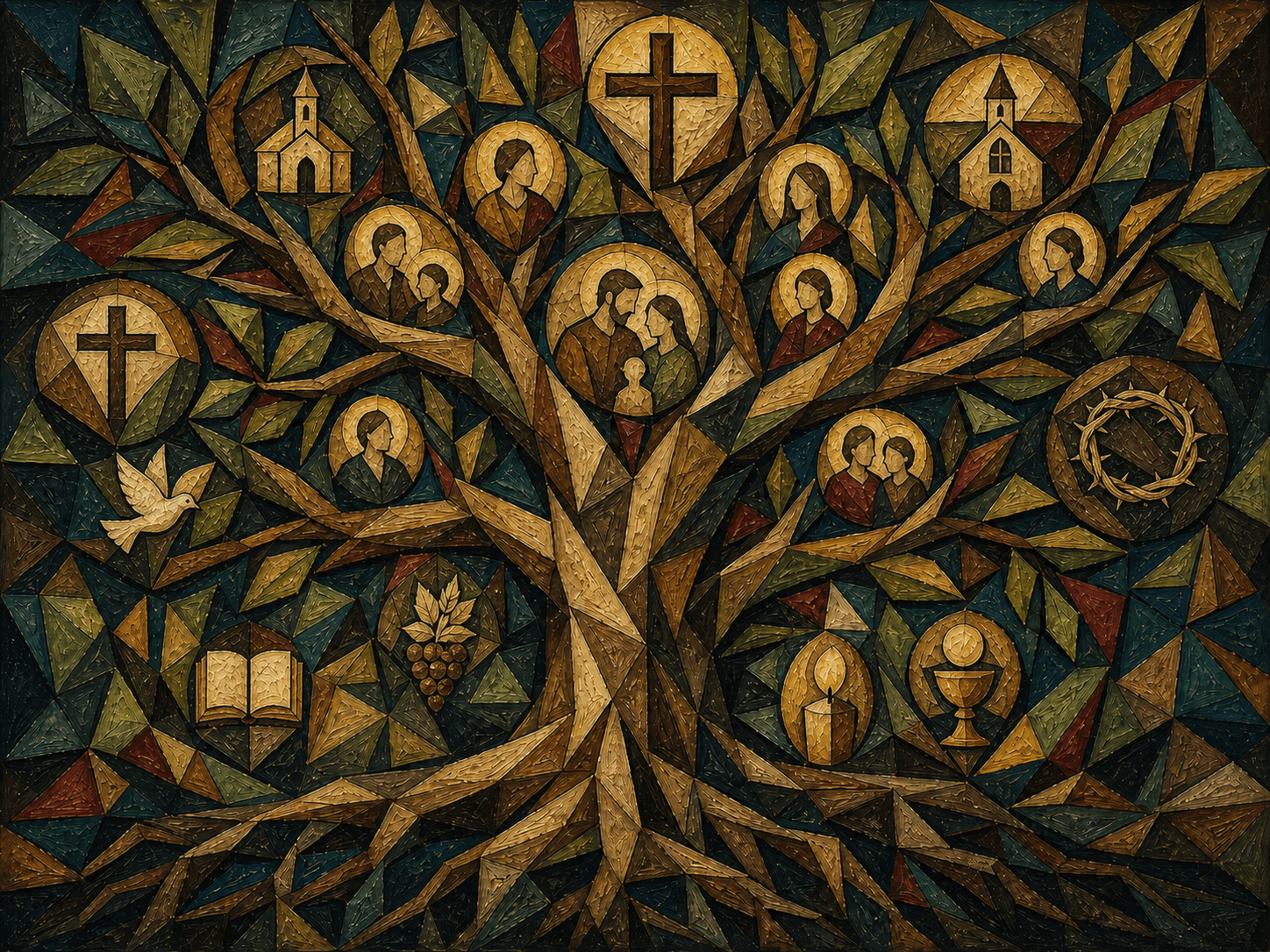
Devotion is not Hereditary
You are sitting in an inherited room. It might be your father's business, an organization founded by someone whose portrait still hangs by the door, or a culture shaped by a leader everyone still quotes. You did not build this room. You maintain it. The chairs were paid for long before you arrived, and they are excellent chairs. But no one has asked you in years whether you would have bought them.
This is not a moral failure. It is simply what it means to arrive second.
The danger lies in the invisible arithmetic underneath. A conviction, when first forged, costs something—a sleepless night, an argument with a friend, a client turned away. By the time that conviction reaches you, it has cooled into a policy. Policies are like furniture: heavy, durable, and entirely unchosen by the person living among them. You can lean on what you never paid for. But you cannot stand on it. That structural work happened in a room you were not yet in.
Consider a story about how truth decays into certainty. You have likely heard the grim statistic about family businesses: 30% make it to the second generation, 12% to the third, and 3% to the fourth. The numbers are quoted everywhere as ironclad law.
But follow the numbers back to their source. They stem from a 1984 study by John Ward, who tracked two hundred Illinois manufacturing firms. Ward originally presented his findings as fluid ranges rather than precise edicts. Yet as his research traveled through decades of articles and slide decks, the nuance was actively stripped away. The ranges mutated into sharp, merciless percentages. Worse, a crucial preposition was swapped: the original study noted firms survived through the second generation, but the misquote claimed they only survived to it. That single error lopped thirty years off the apparent life expectancy of these companies.
A study on the failure of generational transmission was itself poorly transmitted. But it did not decay into vagueness—it got sharper. More confident. Its true provenance evaporated, and its certainty spiked.
Everything you believe hardens as it travels away from the reason you believed it.
This mechanism explains why legacies fail. Sometimes it is the founder who refuses to hand anything over, fearing no one else will hold it properly. That is not stewardship; it is a hostage situation disguised as a succession plan. Other times, it is the successor who treats the inherited structure as a shield, using the founder’s rules as an alibi to avoid making their own difficult choices.
If conviction inevitably decays, why build at all? Because the conviction itself is not what survives. What transmits is the framework that makes re-choosing possible: the unavoidable meeting, the written charter that demands debate rather than blind obedience, the ritual that forces a decision from whoever sits in the chair this year.
You cannot hand down belief. You can hand down a moment that demands one.
The oldest record of this failure is in Ezekiel 8. An exiled priest is shown a vision of the temple back home. He sees a hidden chamber, buried in the dark. Inside stand seventy of Israel’s elders, clutching censers, thick incense rising, operating on the comfortable premise that no one is watching.
The text names exactly one man in the room, at the moment of maximum secrecy, with maximum precision: Jaazaniah, the son of Shaphan.
His name means Yahweh hears.
His father, Shaphan, was the scribe who stood in the light, read a rediscovered book of the law aloud to King Josiah, and sparked a sweeping national reform. Shaphan paid the hard cost of conviction. His other sons carried that fire forward—one saved the prophet Jeremiah from a mob; another offered his chambers for the public reading of dangerous truths. Righteousness ran three generations deep through one son.
But here, in the dark, stands Jaazaniah. The same father. The same inherited reform. Yet within one generation, the conviction had faded into custom, and Jaazaniah simply walked away from it, choosing the shadows. The most dangerous place to stand is one generation downstream from a reformation.
Eventually, the door to your inherited room will open. A crisis will walk in—a collapsing margin, an angry mob, a moment where the old policy no longer fits the new reality. The portrait on the wall cannot speak. The heavy furniture cannot bear the weight of a sudden moral dilemma.
In that moment, you are not maintaining a legacy; you are standing in the ruins of one, holding a match. You are forced to decide whether to retreat behind the inherited rules, or to pay the sudden, exorbitant price of forming your own conviction. Cost is what converts furniture into foundation.
You are allowed to keep the chairs. But when the fire starts, you are not allowed to sit in them.